Golan Heights — רמת הגולן — هضبة الجولان Source Dossier
The documentary evidence behind two narratives, with the accessibility of each original noted. One thing has to be said before the sections open, because equal-length sections could otherwise imply something untrue: the international-legal position here is not evenly divided. The Security Council declared the 1981 law null and void unanimously, the United States voting in favour. De facto control and the near-universal legal position diverge sharply, and the third-party section carries that rather than splitting the difference. This page nonetheless does not state who holds title, because no court has been asked. Every card in the two narratives carries the other side's rebuttal.
VOTEWhich story do you find more convincing?↓Naming rule There is no neutral English name. Under this site's rule the name of the state in effective control leads, which is why the Hebrew precedes the Arabic here — that is a statement about control, not about title. This edition writes occupied with its attribution visible rather than bare — it is the term used by the Security Council in Resolution 497, by the UN Secretariat, the ICRC, the European Union and the wire services, and the standing General Assembly agenda item is titled "The occupied Syrian Golan." That is a reportable fact about international usage. Israel does not use the word annexation and this page never puts it in Israel's mouth: where the 1981 act is described, the statute is quoted or the act is called what Israel calls it — the application of its law, jurisdiction and administration. One further distinction, since this site uses annexation in its own voice on the Crimea page: there the word names a discrete completed act, and the acquiring state does not deny the act occurred, only its legality. Here occupied would name a continuing legal status — which is the same question as title, and this page declines to settle that by vocabulary when it will not settle it by argument. One term this page uses in its own voice without a rule of its own: settlement and settler, which are the terms of the Fourth Geneva Convention and of the UN system, and which Israel does not use for these communities
Israel leads onSyria leads onread in opposite ways
Current status — as of August 2026 Status as of 2026-08
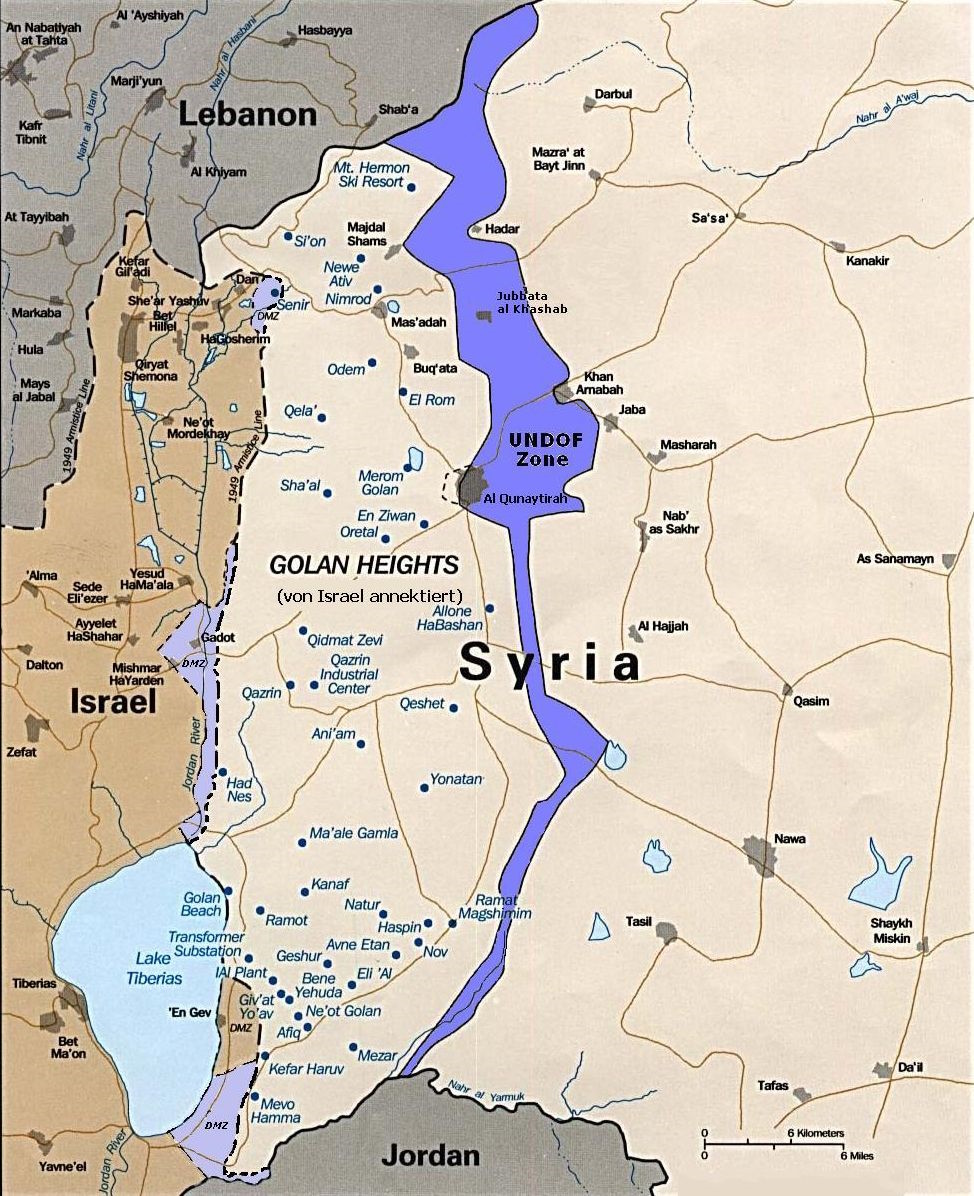
De facto control 🇮🇱 Israel has held roughly two-thirds of the Golan — about 1,200 km² of some 1,800 — since 9–10 June 1967. Syria recovered roughly a third, including Quneitra city, under the disengagement agreement of 1974. Since December 2024 Israeli forces have also held positions beyond the ceasefire line on the Syrian side2026-08
De jure status the Security Council declared the 1981 Golan Heights Law "null and void and without international legal effect" by fifteen votes to nil, and confirmed that the Fourth Geneva Convention continues to apply. The United States recognised Israeli sovereignty in 2019 and Colombia became the second state to do so on 10 August 2026. No court has ruled on title — the International Court of Justice has never addressed the Golan2026-08
Israel's designation the Golan Regional Council and the local council of Katzrin, attached to Israel's Northern District. Israeli law, courts, taxation and municipal administration have applied since the law of 14 December 19812026-08
Syria's designation Quneitra Governorate, never abolished, administered from a provisional seat at Madinat al-Baath with the ruined city of Quneitra as its nominal capital2026-08
Displacement of 1967 between 100,000 and about 130,000 Syrians left or were expelled when Israel took the Golan on 9–10 June 1967, and around 340 villages and farms were destroyed or depopulated. Roughly 6,000 to 7,000 people remained, overwhelmingly the Druze of the Hermon slopes. Almost none of the displaced or their descendants has returned in fifty-nine years. The figures are a range and no census exists2026-08
Population today about 60,000–63,000 in the Israeli-controlled sector — what remains after 1967, and now mostly people who arrived since: roughly 31,000 Israeli settlers across more than thirty settlements, and about 29,000 Syrian Druze in four villages — Majdal Shams, Buqʿata, Masʿada and Ein Qiniyye, with the Alawite village of Ghajar on the Lebanese border usually counted separatelyunverified2026-08
The Druze and citizenship classified as permanent residents rather than citizens after the community refused citizenship in 1981 and Majdal Shams struck for nineteen weeks in 1982. About 20% of the community held Israeli citizenship in January 2025. Israeli Interior Ministry figures for early 2026 give naturalisation rates of 38% in Majdal Shams and 37–43% in Buqʿata, Masʿada and Ein Qiniyye — village-level rates from a different source, not directly comparable with the community-wide share. Approvals in 2022–24 totalled 1,126 against 539 in the preceding five years2026-02
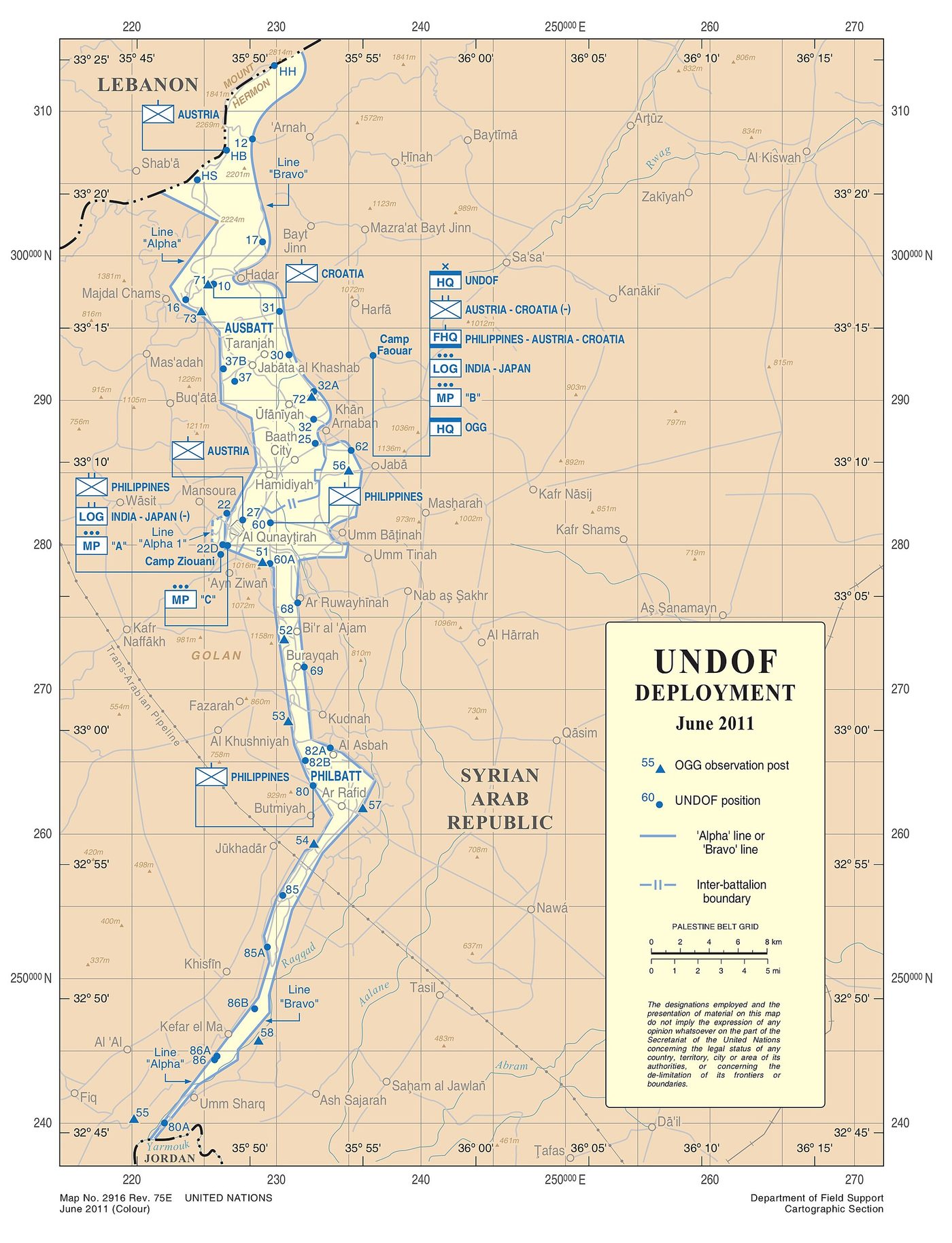
UNDOF established by Resolution 350 on 31 May 1974. The area of separation is about 235 km², some 80 km long and 0.5–10 km wide; mandated strength is about 1,200. The mandate runs in six-month increments; the increment current when this page was compiled expired on 30 June 2026 and the renewal has not been confirmed hereunverified2026-08
Israeli positions on the Syrian side the Secretary-General reported ten positions in the areas of separation and limitation on 3 November 2025, and eleven, reinforced, on 13 February 20262026-02-13
The Secretary-General's findings, 10 March 2026 unauthorised Israeli personnel, equipment and drones crossing the ceasefire line; construction inside the area of separation; thirteen restrictions on UNDOF movement and two incidents of Israeli soldiers threatening United Nations observers. The same report records checkpoints and raids in Daraa and Quneitra governorates, arbitrary arrests of Syrian civilians, and chemical spraying over agricultural land in Quneitra in February 2026. An Israeli tank fired across the ceasefire line on 3 April 20262026-03-10
Quneitra in January 2026 Israeli forces demolished the city's historic hospital and cinema — the two preserved ruins Syria had maintained as a memorial since 19742026-01
Talks Israel, Syria and the United States met in Paris on 6 January 2026 and agreed a joint communication mechanism; US-mediated talks in Jordan on 23–24 August 2026 produced no agreement. Syria's foreign minister stated on 14 February 2026 that the negotiations concern withdrawal from territory taken after December 2024 and expressly exclude the Golan itself2026-08-24
Settlement policy the Israeli cabinet approved more than 40 million shekels on 15 December 2024 to double the Golan's settler population, including a student village and infrastructure2024-12
Water the Golan contributes about 275 million cubic metres a year of Israel's roughly 1,780 million in historic renewable resources — about 15%. The often-repeated claim that it supplies a third of Israel's water is roughly two decades out of date; desalination supplied 86% of drinking water by 20222022
⚠ Four cautions.No court has ruled on the Golan. The International Court of Justice has never addressed it in a contentious case or an advisory opinion; its 2024 opinion concerns the Occupied Palestinian Territory and is cited on this page only for the general principle it states. Saying the Court has ruled here is the easiest and most damaging error available on this subject. The displacement figures of 1967 are a range, not a number — 100,000 and about 130,000 are both widely cited, with around 340 villages destroyed or depopulated, and no census exists. The report this page could not confirm has since been confirmed, and is now stated as fact on this page: Colombia recognised Israeli sovereignty on 10 August 2026, the second state to do so. And the General Assembly vote tallies for December 2025 come from secondary summaries rather than from the official record.2026-08
Change log
Colombia recognises Israeli sovereignty over the Golan — the second state to do so, seven years after the United States. Saudi Arabia, Egypt and Qatar condemn the decision; Syria protests to the United Nations on 12 August.
US-mediated talks in Jordan end without agreement. Syria's stated position: it did not see a real will to reach one, and the priority is halting Israeli operations before any security agreement.
An Israeli tank fires across the ceasefire line.
The Secretary-General reports unauthorised Israeli crossings of the ceasefire line, construction in the area of separation, thirteen restrictions on UNDOF movement and two incidents of Israeli soldiers threatening UN observers.
Syria's foreign minister states that the negotiations concern withdrawal from territory taken after December 2024 and expressly exclude the Golan.
Israel, Syria and the United States hold trilateral talks in Paris and agree a joint communication mechanism supervised by the United States.
Israeli forces demolish Quneitra's historic hospital and cinema, preserved by Syria as a memorial since 1974.
The General Assembly resolution demanding withdrawal to the line of 4 June 1967 passes 123–7–41. Figures from secondary summaries, not the official record.
The Israeli cabinet unanimously approves more than 40 million shekels to double the Golan's settler population.
The Assad government falls. Israeli forces enter the area of separation and take the Syrian side of Mount Hermon; Netanyahu declares the 1974 disengagement agreement to have collapsed. The following day: "The Golan Heights will forever be an inseparable part of the State of Israel."
United States Proclamation 9852 recognises Israeli sovereignty. Rejected by the UN Secretary-General, the EU unanimously, Russia, China, Japan, Canada, the Arab League and every Arab state that commented.
⇄ The order of the two narrative sections below is randomized on every visit.
Israel's narrative 6 sources
Eighteen years in which the escarpment above the Galilee was among the most violent lines in the region; a war Israel characterises as defensive; a boundary drawn in 1923 that put the whole Sea of Galilee on the western side; a resolution that says territories and not the territories; and, since 1981, the application of Israeli law to ground it says it holds lawfully.
The Golan Heights Law 14 December 1981
Passed through all three readings in a single day, 63 votes to 21, and signed by President Navon, Prime Minister Begin and Interior Minister Burg. Begin's stated grounds were a near-universal national consensus. He asked the House whether anyone imagined that Israel would "wait an unlimited time, even five generations and more … until a sign is given us by the Syrians that they are willing to speak with us of peace and good neighbourliness," and said that "no one will push us to the lines of 4 June 1967 … the lines of oblivion, the lines of bloodshed, the lines of provocation to aggression." Officials described the act as regularising the situation. The word annexation does not appear in the statute. Israeli law, courts, taxation and municipal administration have applied there since.
The Law, jurisdiction and administration of the State will take effect in the Golan Heights, as described in the Schedule. — the operative clause in full · and Begin, challenged in the Knesset: "You use the word 'annexation.' I do not use it."
Meaning
Israel's position is that this was an exercise of domestic legislative competence over territory it holds lawfully — not a transfer of sovereignty requiring anyone else's recognition, and not the act the word annexation describes.
Syria rebuts
Syria's answer is that the label is beside the point: whatever the statute calls itself, its effect is to apply the law of one state to the territory of another, which is what the prohibition on acquisition of territory by force forbids. Three days later the Security Council declared the law null and void and without international legal effect — unanimously, fifteen votes to nil, with the United States in favour — and called on Israel to rescind it. Israel did not, and no state recognised the change for thirty-eight years.
original publisheddocumentedOne database dates the vote 15 December; the great majority of sources give 14 December, and that is used here. Begin’s words are taken from the official Knesset record of that sitting and translated for this page; the same record puts the division at 63 in favour and 21 against. He said lines, not borders, and the distinction is the one this page keeps everywhere. The Hebrew קווי החידלון has no settled English equivalent and is rendered here as the lines of oblivionThe Golan Heights LawText and context (ECF, Israeli peace initiative)Knesset plenum record, 14 December 1981 (Hebrew)
United States Proclamation 9852 25 March 2019
Signed at the White House alongside Netanyahu. Its stated reasoning is security rather than title: Iranian and Hizballah activity in southern Syria makes the Golan a potential launching ground, and any future peace agreement must account for Israel's need to protect itself. The recognition was maintained by the following administration.
The State of Israel took control of the Golan Heights in 1967 to safeguard its security from external threats… Based on these unique circumstances, it is therefore appropriate to recognize Israeli sovereignty over the Golan Heights… I, Donald J. Trump… do hereby proclaim that, the United States recognizes that the Golan Heights are part of the State of Israel.
Meaning
Israel's argument that a permanent member of the Security Council has recognised its sovereignty, and that the security rationale the proclamation gives is the same one Israel has advanced since 1967.
Syria rebuts
Syria's answer is that recognition by one state does not alter title, and that this one stood alone: it was rejected by the UN Secretary-General, by the European Union unanimously, by Russia, China, Japan, Canada, the Arab League and every Arab state that commented — including states then normalising relations with Israel. For seven years no other state followed; Colombia became the second on 10 August 2026, and Syria protested to the United Nations two days later. Syria adds that the proclamation's own logic — that security necessity can justify recognition of sovereignty — is the argument the International Court of Justice rejected in 2024 — in an advisory opinion about the Occupied Palestinian Territory, not the Golan, on which no court has ruled — holding that security concerns cannot override the prohibition on acquisition of territory by force.
The topography, and the years before 1967 1949 – 1967
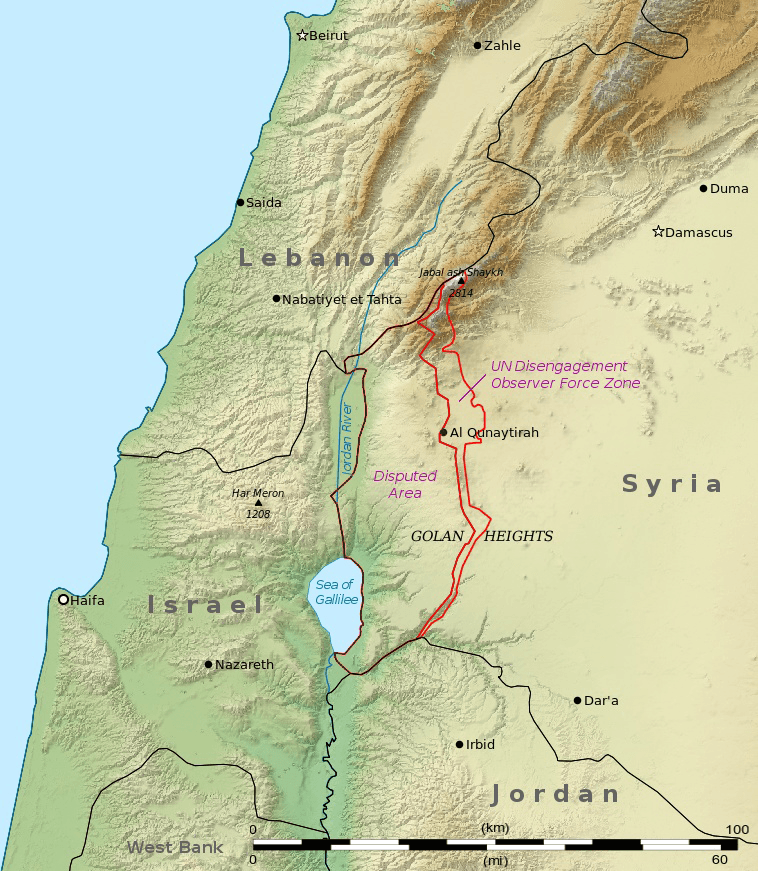
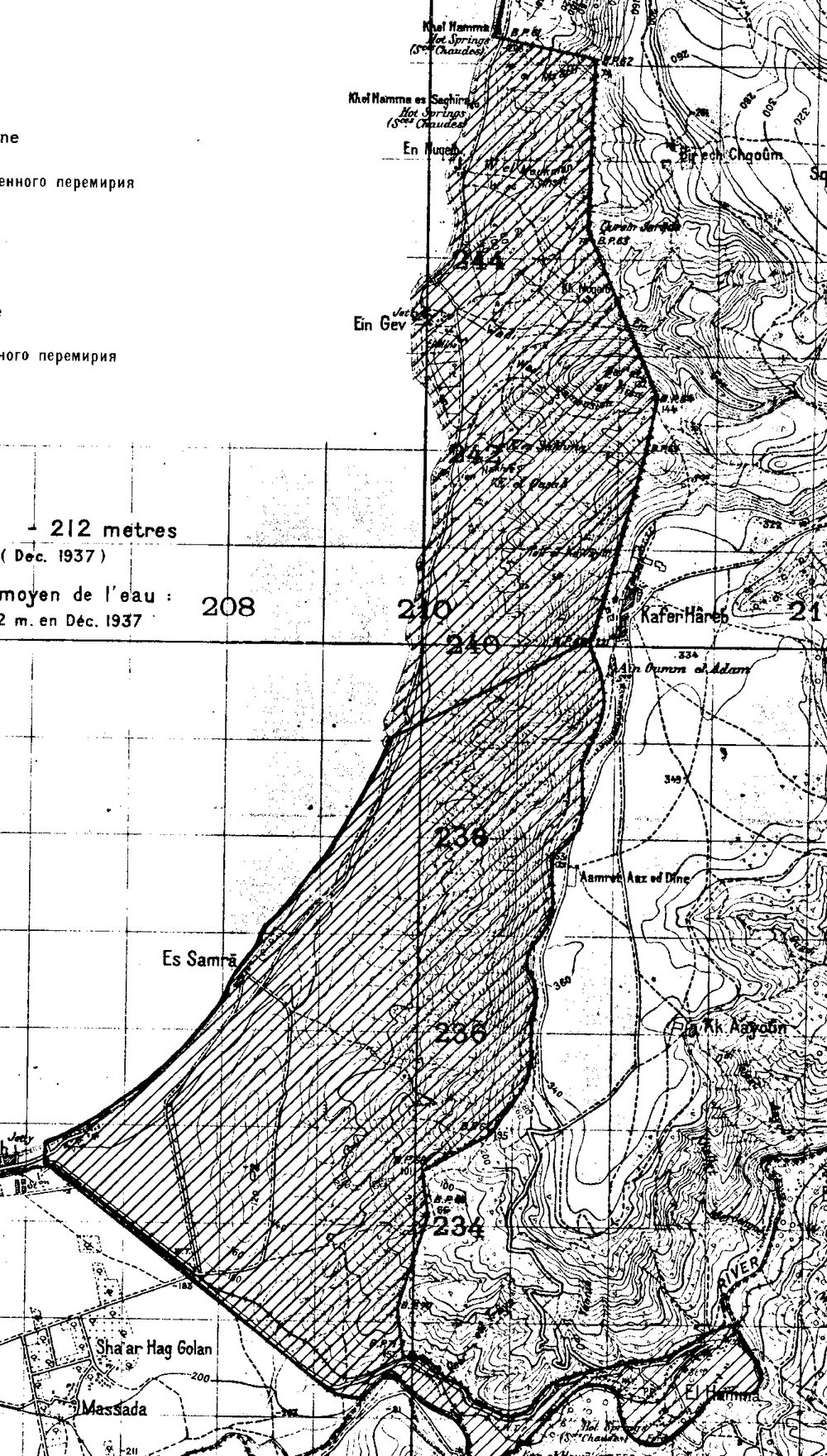
The escarpment rises some 500 metres above the Hula Valley and eastern Galilee. Between 1949 and 1967 the line below it was among the most violent in the region. The 1949 armistice left three demilitarized zones of about 66 km² whose legal status both sides contested — Israel treating them as territory where its sovereignty was merely suspended, Syria and the United Nations treating them as undetermined — producing recurring firefights over cultivation and water works. Israel adds the Arab Headwater Diversion Plan: at the Cairo Arab League summit of January 1964 Arab states resolved to divert the Jordan headwaters to defeat Israel's National Water Carrier, and Syria began a 73-kilometre canal from the Banias, which rises on the Golan, at about 90 million cubic metres a year. On one contemporary assessment the scheme would have deprived Israel of 35% of its contemplated withdrawal from the upper Jordan — around one ninth of its annual water budget. Israel struck the works with tanks, artillery and then aircraft.
Meaning
Israel's argument that the Golan is not an acquisition of convenience but the ground from which its northern valleys were shelled, and that a page which opens in June 1967 starts the clock where it suits the other side.
Syria rebuts
Syria's answer is that the demilitarized-zone incidents were driven by Israeli encroachment — draining the Hula and cultivating zone land in defiance of the armistice and of United Nations rulings — and that Israeli commanders, Dayan among them in a 1976 interview published after his death, later conceded provoking exchanges, an account contested in Israel. On water, the diversion plan was itself a response to Israel's National Water Carrier, built outside any agreed allocation. And in law, a history of border violence is not a title: the prohibition on acquiring territory by force admits no exception for a frontier that was dangerous beforehand, and it does not reach civilian settlement at all.
The 1923 boundary — Israel's negotiating line 7 March 1923
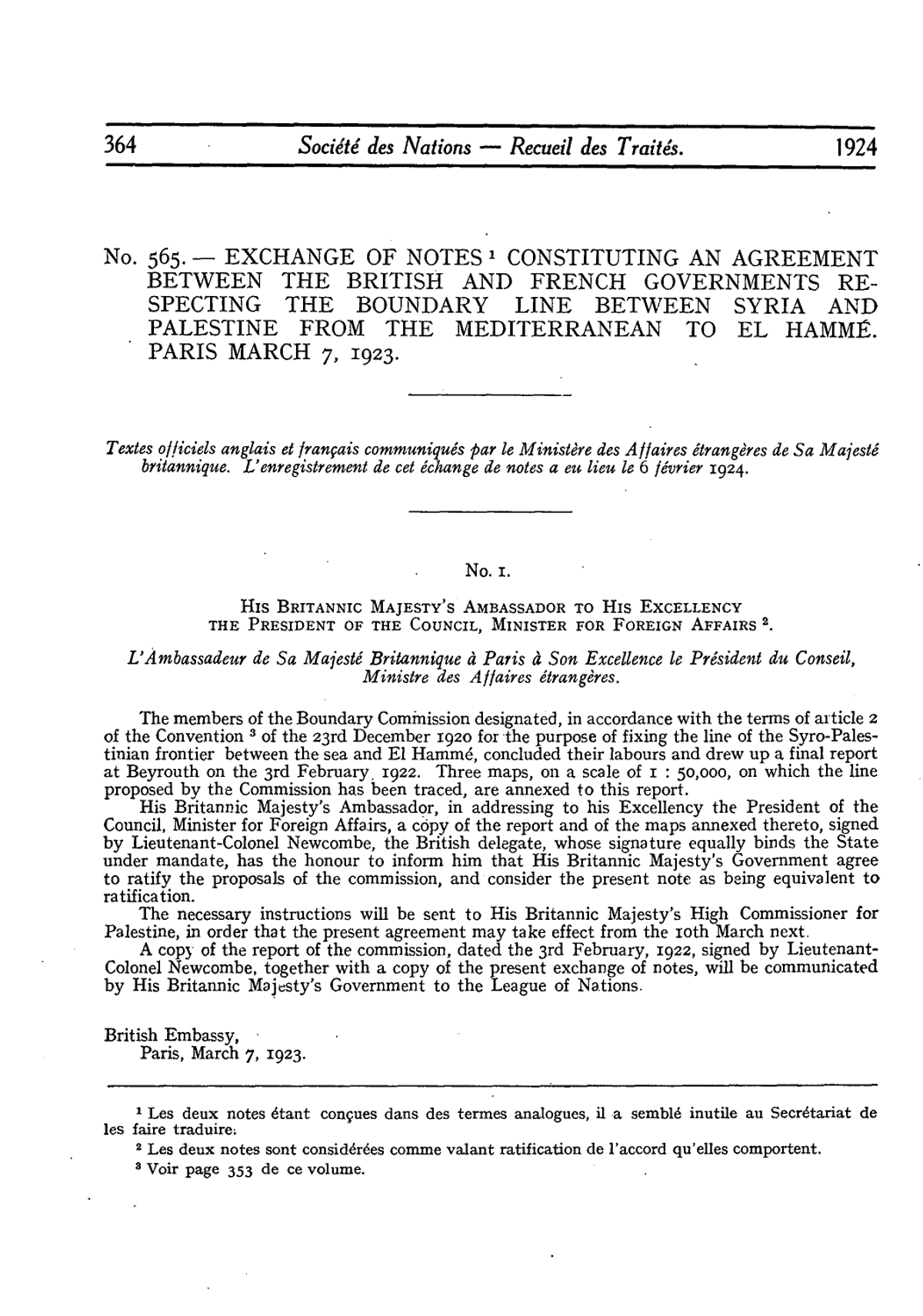
The Anglo-French exchange of notes of 7 March 1923 — the Paulet–Newcombe line, registered in the League of Nations Treaty Series — placed the entire Sea of Galilee, plus a ten-metre shore strip, inside Mandatory Palestine, and the whole Jordan between Hula and Tiberias likewise. At Shepherdstown in January 2000 Israel insisted on this line, which would deny Syria direct access to the lake. The line was demarcated cairn by cairn on three 1:50,000 sheets. It is also not only Israel's preference: the draft treaty language prepared by the American mediator Frederic Hof reproduced the 1923 formula almost verbatim.
After cairn 60 the frontier follows a line parallel to and 50 metres east of the eastern branch of the Jordan to the mouth of that branch in Lake Tiberias. From the mouth of the Jordan to the sulphur springs at Messifer… the frontier follows a line on the shore parallel to and at 10 metres from the edge of Lake Tiberias…
Meaning
Israel's position that the relevant boundary is the one international instrument that actually drew a line here, rather than an armistice line of 1949 or the forward positions of 4 June 1967.
Syria rebuts
Syria's answer is that the line it seeks is the one it held on 4 June 1967, which reached the shore; that the 1923 boundary was drawn by two colonial powers dividing mandates between themselves, was never agreed by an independent Syria and has not been recognised by it; and that the same agreement preserved Syrian rights — "Any existing rights over the use of the waters of the Jordan by the inhabitants of Syria shall be maintained unimpaired", together with equal fishing and navigation rights on Lakes Hula and Tiberias. The talks at Shepherdstown ended without agreement on exactly this point.
The legal argument — defensive war, the missing reversioner, and 242 1967 – present
Israel's case has three interlocking parts. The Golan was taken in a war Israel characterises as defensive, and it argues the prohibition on acquisition by force bites hardest on aggressive war. The missing reversioner thesis, developed by Yehuda Blum and adopted in substance by Attorney-General Meir Shamgar in 1971 — written about the West Bank and applied to the Golan only by extension, holds that the law of belligerent occupation presupposes an ousted legitimate sovereign with reversionary rights, and that where none exists the occupier's own claim may be the strongest. And Resolution 242 requires withdrawal from territories, not the territories — read as deliberately permitting less than full withdrawal pending negotiated secure and recognised boundaries.
Meaning
Together these support Israel's contention that the Fourth Geneva Convention applies at most as a matter of practice rather than obligation, and that the final line is a matter for negotiation rather than for restitution.
Syria rebuts
Syria's answer is that the second limb does not fit this territory at all. The missing-reversioner argument was built for territory whose prior sovereign was contested; Syria was an independent member state of the United Nations in undisputed possession of the Golan on 4 June 1967. There is no missing reversioner here — there is a state that has never stopped administering Quneitra Governorate. On the first limb, the Security Council's own resolution opens by "emphasizing the inadmissibility of the acquisition of territory by war" without distinguishing which side began it. On the third, see the first battleground below.
On 8 December 2024, as the Assad government collapsed, Israeli forces entered the UNDOF area of separation and took the Syrian side of Mount Hermon. Netanyahu declared the 1974 disengagement agreement to have "collapsed" because the counterparty had ceased to exist, and said troops would remain until another arrangement was found. On 15 December the cabinet unanimously approved more than 40 million shekels to double the Golan's settler population.
The Golan Heights will forever be an inseparable part of the State of Israel. — Netanyahu, 9 December 2024
Meaning
Israel's argument is one of changed circumstances: a bilateral agreement presupposes a state on the other side capable of performing it, and the collapse of the regime created an immediate security void on the highest ground in the theatre.
Syria rebuts
Syria's answer is that the agreement binds Israel regardless of who governs in Damascus, and that the successor government has reaffirmed it and has not retaliated militarily. The Secretary-General's reports document what followed as findings rather than allegations: Israeli forces holding ten positions on the Syrian side in November 2025 and eleven by February 2026; unauthorised personnel, equipment and drones crossing the ceasefire line; construction inside the area of separation; thirteen restrictions on UNDOF movement and two incidents of Israeli soldiers threatening United Nations observers. The same reports record what has been done to civilians rather than only to the mission: checkpoints and raids in Daraa and Quneitra governorates, arbitrary arrests, and chemical spraying over agricultural land in Quneitra in February 2026. In January 2026 Israeli forces demolished Quneitra's hospital and cinema — the two ruins Syria had preserved as a memorial since 1974.
A governorate that has never been abolished; a population of perhaps a hundred thousand that left in June 1967 and has not returned; a city dynamited before it was handed back; and a Security Council that declared the 1981 law void without a single dissenting vote.
Quneitra Governorate was never abolished 1974 – present
Syria has maintained Quneitra Governorate as a live administrative unit since 1974, governed from a provisional seat at Madinat al-Baath, with the ruined city of Quneitra as its nominal capital. Its position, unchanged across the Assad and post-Assad periods, is that the Israeli presence is belligerent occupation which cannot ripen into title however long it lasts, and that the 1981 law changed nothing in law. Syria presses the annual General Assembly resolution titled "The Syrian Golan", which on 2 December 2025 demanded withdrawal to the line of 4 June 1967 and passed 123 to 7 with 41 abstentions.
Meaning
The documentary spine of the Syrian claim: administrative continuity converts we assert sovereignty into we have never ceased exercising the forms of sovereignty.
Israel rebuts
Israel's answer is that a governorate administered from outside the territory, over a population that mostly left in 1967, is a claim rather than an exercise of authority — and that General Assembly resolutions are recommendatory, not binding, however large the majority. Its live argument in 2026 is about capacity rather than history: a state that lost control of much of its own recognised territory between 2011 and 2024, that could not protect Druze communities in Suwayda in 2025, and that concedes it cannot presently guarantee the security arrangements a handover would require, is not in a position to take back strategic high ground. Syria's reply is that Israel is meanwhile demanding a demilitarised zone reaching toward Damascus — that is, more concession from the weaker party, not less.
copies publisheddocumentedunverifiedTwo different General Assembly resolutions on the Golan were adopted in December 2025 and are easily confused. The Syrian Golan (A/RES/80/73, 2 December, 123 to 7 with 41 abstentions) is the one that demands withdrawal to the line of 4 June 1967; The occupied Syrian Golan (A/RES/80/82, 5 December, 146 to 6 with 23 abstentions) is the Fourth Committee text. Both UN records were opened for this page, and the roll call was counted from the voting record.QuneitraA/RES/80/73, The Syrian Golan — UN record
The destruction of Quneitra 1974 — UNGA Resolution 3240
Under the disengagement agreement of 31 May 1974 Quneitra was to return to Syrian control. Before withdrawing, Israeli settlers from Merom Golan attempted to block the handover by declaring a settlement on the site. A United Nations special committee commissioned the Swiss engineer Edward Gruner, who documented the deliberate destruction of nearly 4,000 buildings and infrastructure valued at 463 million Syrian pounds — the forensic signature being pancaked roofs indicating systematic dynamiting rather than artillery damage, filmed in May 1974 before the handover. The resolution passed 93 to 8, with 74 abstentions.
a grave breach of the [Fourth] Geneva Convention — General Assembly Resolution 3240, 29 November 1974
Meaning
Syria's argument that the territory was not merely taken but rendered unusable before it was returned, and that the ruined city it has preserved since is the physical record of that.
Israel rebuts
Israel's answer is that most of the damage resulted from the wars of 1967 and 1973 and the artillery duels of the War of Attrition between them rather than from pre-withdrawal demolition, and — going to the evidence directly — that Gruner's methodology could not reliably distinguish war damage from demolition. It also notes the 74 abstentions on Resolution 3240, an unusually large bloc, as an indication of how many states declined to endorse the characterisation.
original publisheddetermined by an international bodyThe resolution was retrieved and read for this page; part C concerns the destruction of Quneitra and its operative paragraph 2 carries the words quoted here. The vote figures and the Gruner report are still cited from secondary compilation.QuneitraA/RES/3240 (XXIX) — official record
The displacement of 1967 9–10 June 1967
With the Israeli capture of the Golan the great majority of the Syrian civilian population left or was expelled, and the figures are a range from different literatures rather than a number. Wikipedia's Six-Day War article gives 100,000; UN and NGO literature commonly gives about 130,000 and describes two-thirds of the area as depopulated; some Syrian sources give higher. Around 340 villages and farms are commonly cited as destroyed or depopulated. Roughly 6,000 to 7,000 people remained, overwhelmingly the Druze of the Hermon slopes. On the Majdal Shams record, residents of ʿAyn Fit and Banias who had sheltered there "were forced across the ceasefire line into Syrian-controlled territory"; Majdal Shams itself was permitted to remain.
Meaning
The human core of the Syrian case, and the answer to any description of the Golan as empty land that Israel settled: it is cleared land. Syria's claim is not only historical — its position is that the displaced and their descendants retain a right of return that no passage of time extinguishes.
Israel rebuts
Israel's answer is that the population left during a war it did not start, that the figures are contested and rest on no census, and that a return of that population is a matter for a negotiated settlement rather than a precondition to one. It adds a point about the third of the Golan that was returned: Syria has not resettled Quneitra or the recovered area either, which it argues suggests the non-return of the displaced is not solely an Israeli policy.
copies publisheddocumentedNo census exists; each figure is given with the literature it comes fromThe Six-Day WarMajdal Shams
The line of 4 June 1967, and the Rabin deposit 1993 · 2000
On 3 August 1993 Prime Minister Rabin conveyed to United States Secretary of State Warren Christopher — to Christopher, not to Assad — a conditional willingness to withdraw fully from the Golan over roughly five years if Syria satisfied Israel on security arrangements, water and full normalisation. Christopher relayed it to Hafez al-Assad. This is the pikadon, the deposit. Talks ran through several channels and two rounds at Wye River before collapsing at Shepherdstown in January 2000 and finally at the Clinton–Assad meeting in Geneva on 26 March 2000, which ended within about twenty minutes of substance. Indirect talks under Turkish mediation opened in May 2008 and were broken off by Syria that December. The shoreline is usually given as the cause of the 2000 collapse, though two analysts writing weeks afterwards declined to attribute it solely to that.
The Syrians demanding a commitment for a full Israeli withdrawal to the 1949 armistice lines, while the Israelis insisted on the 1923 international border, denying the Syrians direct access to the Sea of Galilee… The conference ended without an agreement. — on Shepherdstown, January 2000
Meaning
Syria's argument that the principle of full withdrawal was accepted by an Israeli prime minister in 1993 and that what remained was terms, not principle — and that the distance between the two positions is measured in metres of shoreline.
Israel rebuts
Israel's answer is that the deposit was conditional, hypothetical and given to a mediator rather than to Syria, and that successive governments disputed its standing. One analyst's view is that "the extravagant terms Rabin demanded in return and the absolute secrecy he insisted on suggest that he did not mean it." On the substance, Israel maintains the 1923 boundary rather than the 1949 armistice line is the correct international frontier.
The interim government under Ahmed al-Sharaa has held a deliberately bifurcated line: reaffirm the 1974 agreement, decline military retaliation despite repeated Israeli strikes, negotiate over the incursions that followed December 2024, and formally reserve the Golan claim while conceding that its final status is not currently on the table. Syria's foreign minister said on 14 February 2026 that the talks concern withdrawal from territory taken after December 2024 and expressly exclude the Golan itself. Talks in Paris in January 2026 produced a joint communication mechanism; talks in Jordan in August 2026 produced no agreement, Syria saying it did not see a real will to reach one.
The Golan is the right of the Syrian people, and no country will give up part of its land. — and: any recognition of Israeli sovereignty over the Golan is "null and void."
Meaning
Syria's position that the claim survives the change of regime and cannot be traded by any government, while the immediate priority is stopping the operations that began in December 2024.
Israel rebuts
Israel's answer is that the current talks are the recognition of reality it has argued for: a Syrian government negotiating security arrangements while setting the Golan aside is proceeding on the basis that the Golan is not going back. It adds the capacity argument — that a government which concedes it cannot yet guarantee the arrangements a handover would need is not positioned to demand one. Israel maintains its positions beyond the line are temporary and security-driven, and that it will withdraw when an arrangement replaces the agreement it says collapsed.
Settlements, water and the Fourth Geneva Convention 1967 – present
Syria's continuing-injury case rests on the settlements — about 31,000 Israeli settlers across more than thirty of them, with the December 2024 cabinet decision funding a doubling of that population — on water, and on land. Article 49(6) of the Fourth Geneva Convention prohibits an occupying power from transferring parts of its own civilian population into the territory it occupies, and Resolution 497 confirmed that the Convention continues to apply to the Golan.
Meaning
Syria's argument that each new settler is a deliberate act making reversal harder, and that a demographic fact created in breach of the Convention cannot then be offered as a reason the territory cannot be returned.
Israel rebuts
Israel's answer has four limbs. It maintains that "all authorized settlements are entirely legal and consistent with international law"; that the Fourth Geneva Convention does not apply de jure absent a displaced legitimate sovereign, and that Israel observes it in practice rather than by acceptance; that Article 49(6) was drafted against the forced deportations of the Nazi era and does not reach voluntary movement by a state's own citizens; and that settlement on the Golan predates the 1981 law and is separable from it.
About 29,000 people live in Majdal Shams, Buqʿata, Masʿada and Ein Qiniyye — the population that did not leave in 1967. They are counted by Israel as permanent residents and by Damascus as Syrian citizens, and their own position has never been reducible to either.
When Israel applied its law in 1981 it offered citizenship. The community overwhelmingly refused, and Majdal Shams held a nineteen-week general strike in 1982 under Israeli military blockade. The strike succeeded on its own terms: the state classified the community as permanent residents rather than citizens, and their Israeli identity documents recorded nationality as "undefined." That equilibrium is now visibly breaking. Some 6,000 of about 29,000 held Israeli citizenship in January 2025 — around 20% of the community. Israeli Interior Ministry figures for early 2026 record naturalisation rates of 38% in Majdal Shams and 37–43% in Buqʿata, Masʿada and Ein Qiniyye; these are village-level rates from a different source and are not directly comparable with the 2025 community-wide share. Applications approved in 2022–24 totalled 1,126 against 539 in the preceding five years; the share around 2011 was roughly 10%.
Value / limits
A fact that cuts in two directions and is presented as one. Israeli sources read rising naturalisation as consent to a settled reality. Syrian and community sources read it as duress — an occupation that has now outlasted the state that could have protected them, with the civil war, the fall of Assad and, after mid-2025, sectarian massacres of Druze in southern Syria all cited as drivers. Yusri Hazran, quoted in the Times of Israel, puts it: "The Druze see their mother country disintegrating with the fall of the Assad regime and they are looking for an anchor." Its limits: treating the figures only as evidence of coercion denies agency to the people who live there, while treating them only as consent ignores what they are choosing between. And this section is written from outside — the research behind this page could not reach the main Golan-focused human-rights organisation, so what follows rests on secondary sources and on an Israeli academic quoted in the Israeli press, with no community-originated source. That is a real limitation on a section about a people who speak for themselves.
Three arguments where the facts are largely agreed. In the first, the disagreement is about a missing word. Pick a reading and watch the highlighter move; the initial selection is random.
① Territories, or the territories?
English, operative paragraph 1(i): withdrawal of Israeli armed forces "from territories occupied in the recent conflict." French, equally authentic: "retrait des forces armées israéliennes des territoires occupés lors du récent conflit." The resolution opens by "emphasizing the inadmissibility of the acquisition of territory by war." It pairs withdrawal with the right of every state to "secure and recognized boundaries."
The article is missing because it was left out. The resolution was drafted in English, and its British sponsor Lord Caradon and American officials including Eugene Rostow said afterwards that the omission was deliberate — permitting boundary adjustment rather than requiring return to the armistice lines. Withdrawal is paired in the same sentence with secure and recognised boundaries, which the June 1967 lines were not.
The French text is equally authentic and it has the article.Des territoires reads naturally as the territories, and the resolution's own opening words say that acquisition of territory by war is inadmissible — which is not a principle that admits of keeping some of it. On this reading the English omission cannot be doing the work claimed for it, because a resolution cannot mean one thing in one authentic language and the opposite in another.
Both texts are authentic and both readings are available on the face of the resolution — which is why it has survived fifty-nine years as the agreed reference point of a dispute nobody has settled. Two things worth carrying alongside it. Resolution 242 was adopted under Chapter VI, so it is not an enforcement measure whatever it means. And it says nothing specific about the Golan: it addresses the conflict as a whole. A limit on the whole argument, worth stating because this page puts it first: Resolution 497 is Golan-specific, unanimous and unambiguous, which is why 242 matters more today for the West Bank than for the Golan. This is the historic battleground here rather than the live one. And Syria itself did not accept 242 until 1973, when it did so through Resolution 338.
② Was 1981 annexation, or the application of law?
"The Law, jurisdiction and administration of the State will take effect in the Golan Heights, as described in the Schedule." Begin: "You use the word 'annexation.' I do not use it." · Resolution 497, three days later: the law is "null and void and without international legal effect"; Israel is to "rescind forthwith its decision"; the Fourth Geneva Convention "continues to apply to the Syrian territory occupied by Israel since June 1967." Adopted 15–0.
A state applying its own law is not a transfer of sovereignty. The statute does not use the word, the government did not claim the act had international effect, and Israel has not said the Golan's final status is closed to negotiation — Rabin's own conditional offer in 1993 assumed it was not. What the law did was end a fourteen-year military government and place the territory under civil administration.
The label does not change the operation. Applying one state's law, courts and taxation permanently to another state's territory is what annexation consists of, whatever it is called; the Security Council said so three days later, unanimously, with the United States voting in favour. And the same resolution confirmed that the Fourth Geneva Convention continues to apply — which is a finding that the territory is occupied, and that the occupier's own law does not settle its status. The European Community called the law "tantamount to annexation and contrary to international law." And the International Court's 2024 formulation is directly on point even though it concerns another territory: the extension of domestic law and measures of de facto annexation contravene the prohibition on acquisition by force, because the test looks at effect rather than at nomenclature. Since December 2024 the claim that final status remains open has weakened further — "forever an inseparable part of the State of Israel," with funded settler doubling behind it, is hard to read as a preserved negotiating position.
The vote is the fact that carries most weight here, and it is worth stating precisely what it does and does not establish. Fifteen votes to nil, no abstentions, the United States in favour, is as close to unanimous international opinion as the Council produces. But Resolution 497 was not adopted under Chapter VII, so it is a determination rather than an enforcement measure; a follow-up resolution that would have authorised measures was vetoed by the United States a month later. What 497 establishes is near-universal state practice and opinio juris on non-recognition — which is legally significant, and is not the same thing as a binding order.
③ Security necessity against the prohibition on acquisition by force
Proclamation 9852: "Based on these unique circumstances, it is therefore appropriate to recognize Israeli sovereignty over the Golan Heights." · The International Court of Justice, July 2024: security concerns cannot override the prohibition on acquisition of territory by force, and the state concerned "is not entitled to sovereignty" over the territory in question.
A rule that ignores the ground is not a rule anyone can live under. The escarpment overlooks the Galilee, the years before 1967 on that line were violent, and southern Syria has since hosted forces hostile to Israel. Any settlement must account for that, which is what the American proclamation says and what Resolution 242's reference to secure boundaries contemplates. And no state is obliged to return ground from which it has been attacked to a party that cannot guarantee it will not be attacked again — Syria's inability to control its own south since 2011, and the security vacuum on the Hermon massif after December 2024, are offered as proof.
Necessity is the argument every acquisition makes. The prohibition exists precisely because states that take territory always have reasons. The International Court addressed that argument directly in 2024 and rejected it, and the Security Council rejected the same reasoning in 1981 without a dissenting vote. And security needs have an answer short of keeping the ground: demilitarisation, monitoring, early-warning stations and peacekeeping — the architecture the 1974 agreement created, which functioned for fifty years.
An important limit on the second reading, which this page states rather than leaves to be discovered: the International Court of Justice has never ruled on the Golan. No contentious case and no advisory opinion has addressed Israeli–Syrian territorial questions. The 2024 opinion concerns the Occupied Palestinian Territory and is cited here only for the general principle it states, which is regarded as customary law. Anyone who says the Court has ruled on the Golan is wrong, and this is the easiest single error to make on this subject. One fact in this argument has changed since 1967 and belongs to neither side. Golan-origin water is about 275 million cubic metres of Israel's roughly 1,780 million in historic renewable resources — about 15%, not the third often repeated in coverage — and desalination supplied 86% of Israel's drinking water by 2022. That weakens the water strand of Israel's security case and Syria's leverage in equal measure.
Third-party views 5 sources
This is the section where the two narratives stop being symmetrical. On the status of the 1981 law the Security Council was unanimous; on the question of title no court has ruled at all. Both of those are stated here rather than averaged.
Security Council Resolution 497 — unanimous 17 December 1981
…the Israeli decision to impose its laws, jurisdiction and administration in the occupied Syrian Golan Heights is null and void and without international legal effect — Israel to "rescind forthwith its decision" — and the Fourth Geneva Convention "continues to apply to the Syrian territory occupied by Israel since June 1967."
Adopted at the Council's 2319th meeting three days after the Knesset vote, by fifteen votes to nil with no abstentions — the United States voting in favour. The Council asked the Secretary-General to report within two weeks and undertook to reconsider by 5 January 1982 with a view to action under the Charter in the event of non-compliance. Israel did not comply. On 20 January 1982 the United States vetoed a follow-up resolution that would have authorised measures.
Value / limits
The load-bearing document on this page, and the reason the two narratives are not evenly balanced in law however evenly they are set out here. Its limits should be stated as plainly as its content: it was not adopted under Chapter VII, so it is a determination rather than an enforcement measure, and the follow-up that would have given it teeth was vetoed by the same state that had voted for it. What it establishes is near-universal state practice and opinio juris on non-recognition. That is legally significant and it is not a binding order.
Resolution 242 and the missing article 22 November 1967
English: withdrawal of Israeli armed forces "from territories occupied in the recent conflict." · French, equally authentic: "retrait des forces armées israéliennes des territoires occupés lors du récent conflit."
The resolution opens by emphasising the inadmissibility of the acquisition of territory by war, and pairs withdrawal with the termination of claims of belligerency and the right of every state to secure and recognised boundaries. It was drafted in English; the British sponsor and American officials involved said afterwards that the omission of the article was deliberate. The French text, equally authentic, carries the article.
Value / limits
The agreed reference point of a dispute nobody has settled, and the reason it has survived is that both readings are available on its face. Its limits: it is not an enforcement measure under Chapter VII, it addresses the 1967 conflict as a whole rather than the Golan specifically, and fifty-nine years of practice have not produced an authoritative interpretation of the phrase. It is the origin of a negotiating framework rather than a determination of anything.
The Disengagement Agreement, and what it is not 31 May 1974
This agreement is not a peace agreement. It is a step toward a just and durable peace on the basis of Security Council Resolution 338 dated October 22, 1973. — paragraph H
Signed at Geneva and negotiated by Kissinger; Resolution 350 established UNDOF the same day. It created an area of separation of about 235 km², two equal areas of limitation on armament and forces, and returned Quneitra to Syrian administration. The UNDOF protocol sets strength at about 1,200 and requires inspections not less often than once every fifteen days.
Value / limits
The instrument that has actually governed the line since 1974, and paragraph H is the reason it cannot be read as settling anything: the parties said in the text that it was not a peace agreement. Its limits are being tested now — Israel declared it collapsed in December 2024 on the ground that the counterparty had ceased to exist, and the successor Syrian government has reaffirmed it. The Secretary-General's reports treat it as in force and record Israeli positions on the Syrian side as violations of it.
The American recognition of March 2019 was rejected by the UN Secretary-General, by the European Union unanimously, by Russia, China, Japan, Canada, the Arab League and every Arab state that commented — including states then normalising relations with Israel — and was maintained by the following administration. For seven years no other state followed. On 10 August 2026 Colombia became the second, its new government under President Abelardo de la Espriella breaking with its predecessor’s position; Israel’s foreign minister called the decision historic. Saudi Arabia, Egypt and Qatar condemned it, and Syria protested to the United Nations two days later. In December 2025 the General Assembly resolution demanding withdrawal to the line of 4 June 1967 passed 123 to 7 with 41 abstentions, the seven being Micronesia, Israel, Palau, Papua New Guinea, Paraguay, Tonga and the United States; the Fourth Committee text passed 146 to 6 with 23 abstentions.
Value / limits
The measure of whether non-recognition is a practice or a form of words. Since 1981 it has held with two exceptions, the second of them seven years after the first. Its limits: General Assembly resolutions are recommendatory, large majorities there have not changed the position on the ground in any of those years, and a practice is what states do — which they can change.
copies publisheddocumentedunverifiedTwo different General Assembly resolutions on the Golan were adopted in December 2025 and are easily confused. The Syrian Golan (A/RES/80/73, 2 December, 123 to 7 with 41 abstentions) is the one that demands withdrawal to the line of 4 June 1967; The occupied Syrian Golan (A/RES/80/82, 5 December, 146 to 6 with 23 abstentions) is the Fourth Committee text. Both UN records were opened for this page, and the roll call was counted from the voting record.US recognition of the Golan as part of IsraelA/RES/80/73, The Syrian Golan — UN recordA/RES/80/82, The occupied Syrian Golan — UN record
What the International Court has said — and has not 2004 · 2024
The Court has never ruled on the Golan. No contentious case and no advisory opinion has addressed Israeli–Syrian territorial questions. What exists is a general principle stated twice in the Palestinian context and regarded as customary law: in the Wall opinion of 2004 the Court affirmed the illegality of acquisition of territory by force and found settlements established in breach of international law; in the opinion of 19 July 2024 it held that the state concerned "is not entitled to sovereignty" over the territory at issue and that security concerns cannot override the prohibition on acquisition of territory by force.
Value / limits
Included precisely because of what it does not establish. Both opinions concern the Occupied Palestinian Territory, which is a different dispute with a different history, and neither binds anyone in the way a judgment between parties would — advisory opinions are advisory. They are cited here only for the general principle, and stating that the Court has ruled on the Golan is the easiest and most damaging error available on this subject. This page does not carry the Israeli–Palestinian dispute and does not attempt to.
Votes per hour. A surge is not hidden here — it is drawn.
Why people voted
One line, from people who voted. No replies. Your side and country are shown with it.
Vote first — this is where a vote gets its reason.
No lines yet.
The frozen record — never edited, never deleted
Method and limits. Compiled 2026-08-24. Six cautions. First, the two narratives are set out at equal length and the legal position is not evenly divided, and saying so is the most important accuracy commitment on this page: the Security Council declared the 1981 law null and void unanimously, with the United States voting in favour, and no state recognised the change for thirty-eight years. Equal presentation of two cases is not a claim that they are equally supported. The Crimea page on this site makes a statement of legal status in its own voice, on a four-part test it publishes there. That move is not available here, and this page declines it. Non-recognition of the 1981 law is older and more nearly unbroken than Crimea's — forty-five years, and two recognising states rather than a dozen — but no independent judicial body has determined any constituent fact of title: the International Court of Justice has never been asked about the Golan. What this page states in its own voice is therefore narrower: a fact about the distribution of state positions, not a conclusion about who holds the territory. Second, the word occupied is used with its attribution visible — it is the usage of the Security Council, the UN Secretariat, the ICRC, the EU and the wire services, and it is reported as such rather than asserted bare. Third, Israel does not use the word annexation, and this page never puts it in Israel's mouth. Fourth, the legal force of the resolutions is not overstated: Resolution 497 was not adopted under Chapter VII, General Assembly resolutions are recommendatory, and the International Court of Justice has never ruled on the Golan — its 2024 opinion concerns a different territory and is cited only for the general principle. Fifth, the displacement figures are a range and each is attributed, because no census exists; and the claim that the Golan supplies a third of Israel's water is not used, because it is roughly two decades out of date — the supportable figure is about 15%. Sixth, a 2026 report this page could not confirm when it was compiled has since been confirmed and is now stated here as fact: Colombia recognised Israeli sovereignty on 10 August 2026, the second state to do so. Badges follow the two grades in the editorial principles: original published = images or full text publicly available; copies published = the original is lost or unavailable and the text survives in transmission.
Editorial principles. ① Occupied is used with its attribution visible; annexation is never attributed to Israel, which does not use it. ② The order of the two narrative sections is randomized on every visit; the Druze section sits between them because it belongs to neither. ③ Every card is labelled asserted, documented or determined, and every card in the two narratives carries the other side's rebuttal.
The 1923 agreement, as registered with the League of Nations
Public domain — League of Nations, Treaty Series No. 565, registered 6 February 1924 · Wikimedia Commons · The first page shown is Note I, from the British Ambassador. It records that the Boundary Commission "concluded their labours and drew up a final report at Beyrouth on the 3rd February, 1922," that "Three maps, on a scale of 1:50,000, on which the line proposed by the Commission has been traced, are annexed to this report," and that Britain considered the note "as being equivalent to ratification," the agreement to take effect from 10 March. The three 1:50,000 sheets this card refers to are named in the document itself
The ground itself, and one of the zones fought over before 1967
Above: CC BY-SA 3.0 / GFDL — Night w, after Kbh3rd, from NASA SRTM elevation and Natural Earth · Wikimedia Commons. Israel's security argument on this card is a claim about topography, and a relief map is the one form in which a reader can check it rather than take it on trust. Below: public domain — United Nations · Wikimedia Commons. The hatched strip is the Ein Gev – Al Samra – Al Hamma demilitarized zone established under the 1949 armistice, running down to El Hamma — the same El Hammé that gives the 1923 agreement its title. This is an armistice line, not a claimed boundary, and neither party treated it as one. The left edge of the sheet, carrying part of the legend, is cropped in the source file
Where the lines went, and what sits between them
Above: CC BY-SA 3.0 / GFDL — de:Benutzer:Hoheit, 22 January 2006, drawn over a public-domain University of Texas library map · Wikimedia Commons. Below: public domain — United Nations Cartographic Section, deployment as of 1 June 2011 · Wikimedia Commons. Every line on both sheets is a ceasefire or disengagement line, not a border either state claims. That is the point of the 1974 agreement's own Article: the line it draws is not a boundary, and this page does not present it as one
Quneitra, 1974 and after
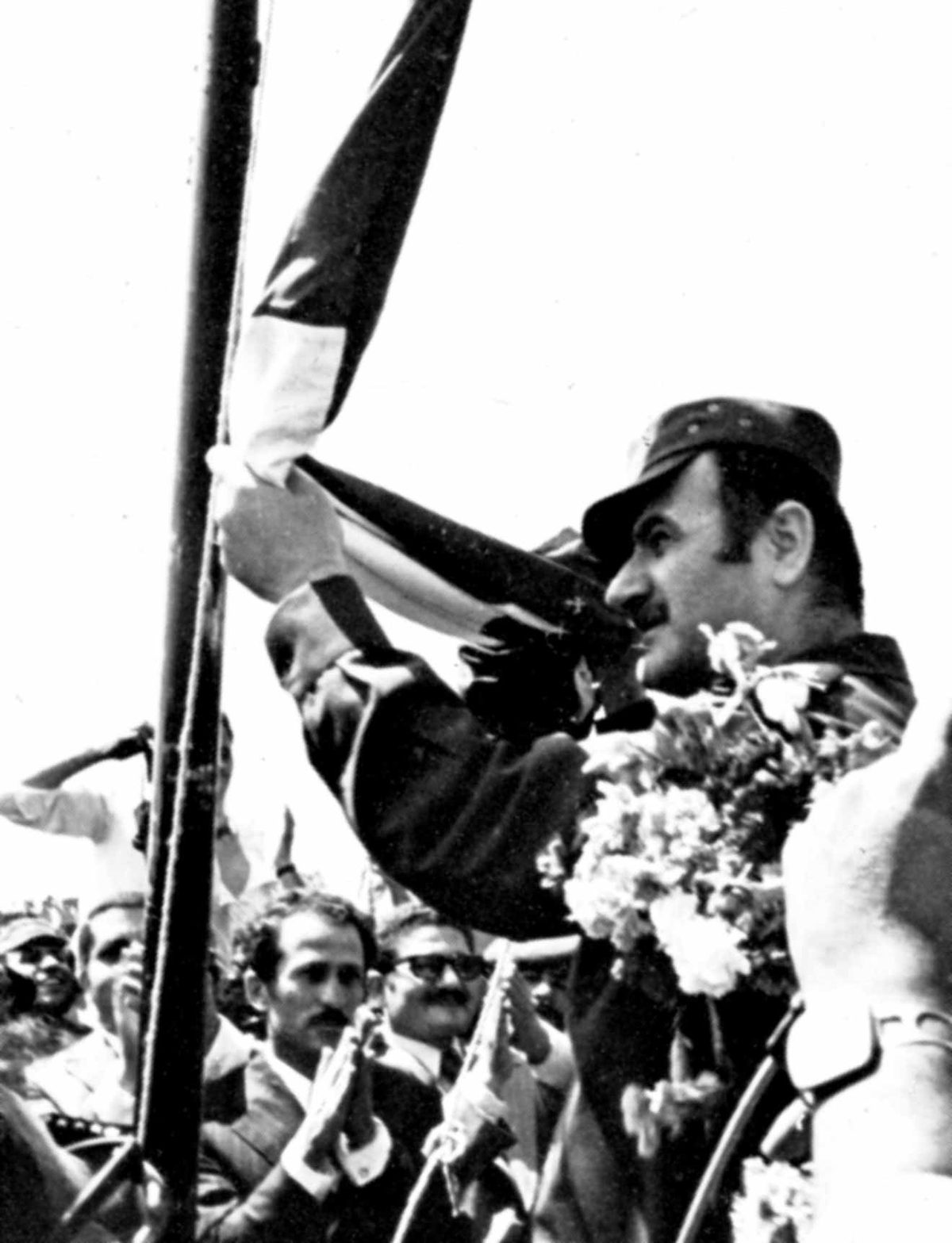
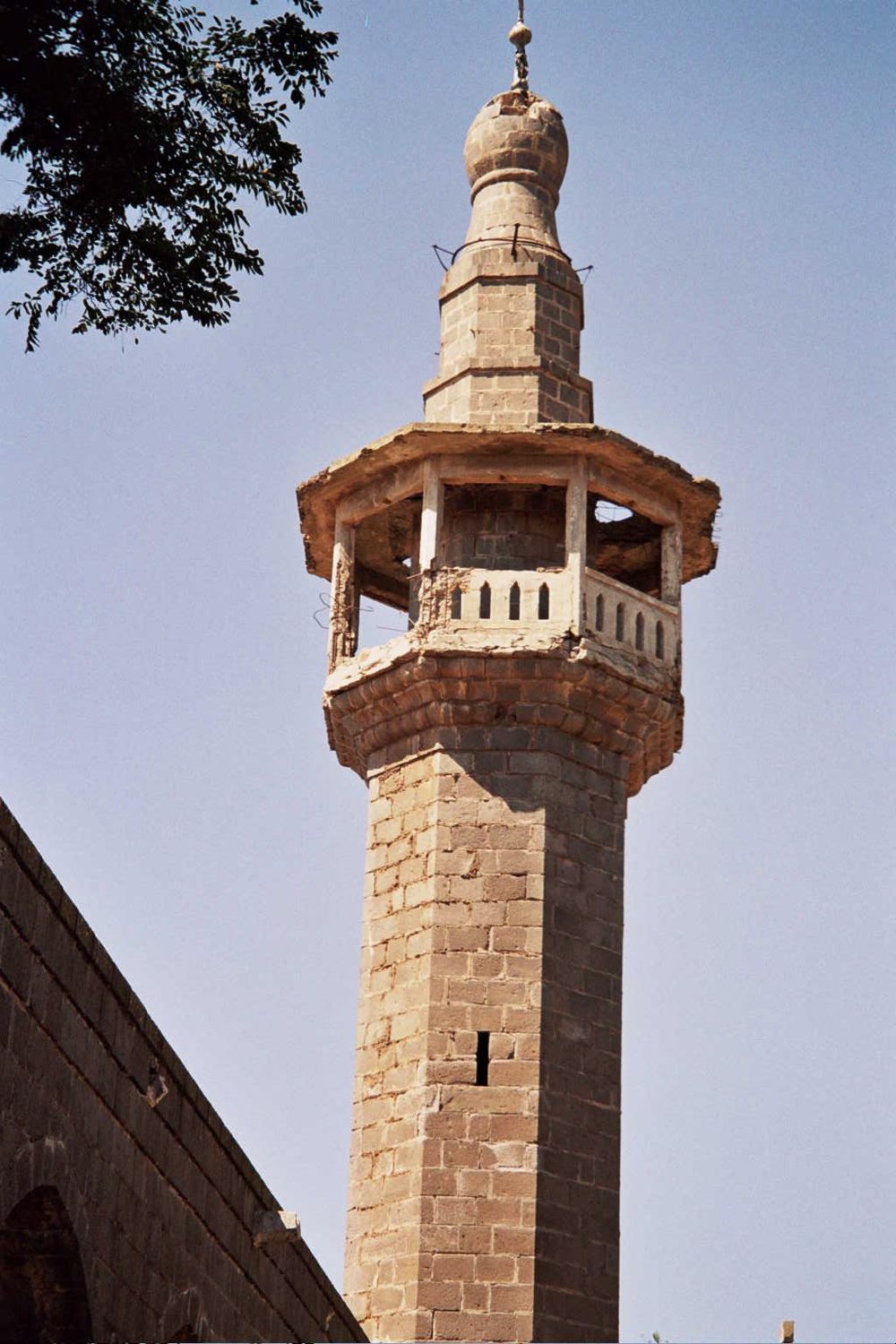
Above: public domain in Syria, term expired under Law 12/2001 — photographer unknown, 26 June 1974 · Wikimedia Commons. Below: CC BY 2.0 — upyernoz · Wikimedia Commons. The city has been left as it was found since 1974. What the photographs cannot settle is the question the card turns on — whether the damage was done in fighting or after the withdrawal — and they are here as a record of the condition of the place, not as evidence for either account